 English
 Français
 Deutsch
 euskara
 Русский язык
 Italiano
 Português
 Nederlands
 Polski
 Greek
Greek Lietuva
 Türkçe
 日本語
日本語 한어
한어 中文
中文 தாமில்
 فارسی
فارسی हिंदी
हिंदी Tiếng Việt
 ภาษาไทย
 Pilipino
 Indonesia
 தாமில்
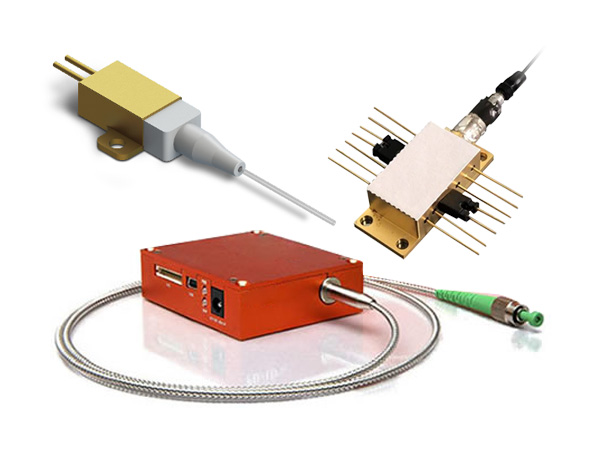
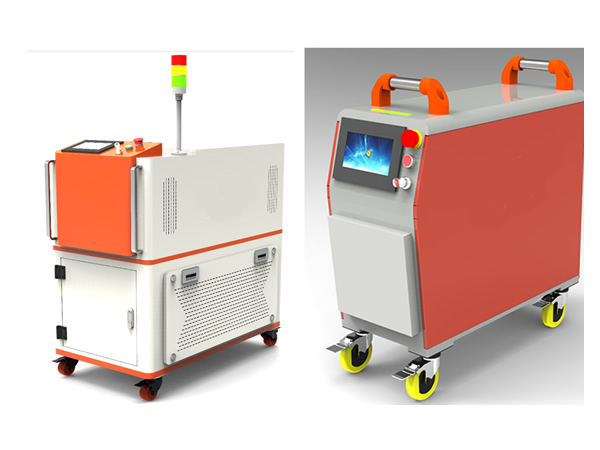
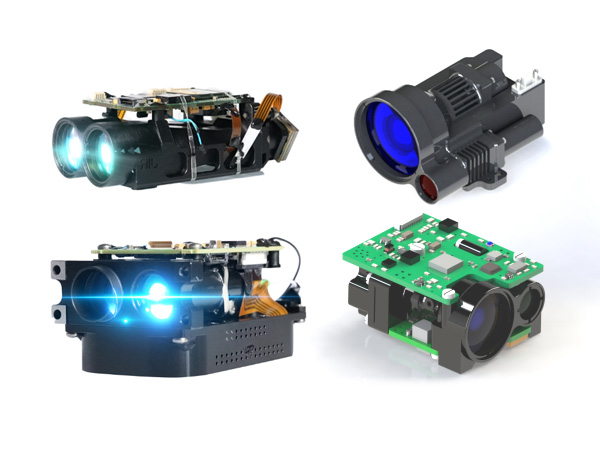
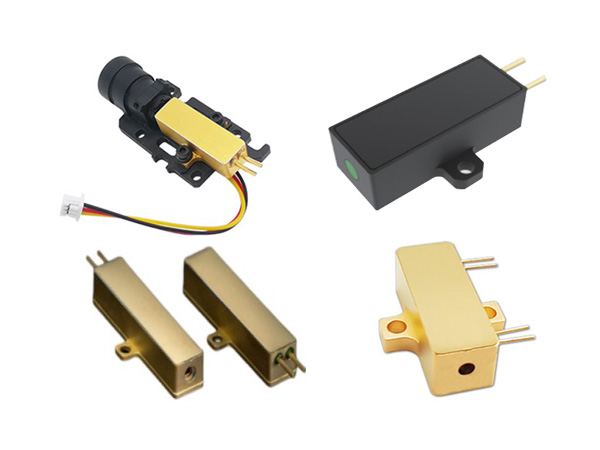

SAG Series Electro-Optic Modulators: Core Advantages, Cases & Prospects
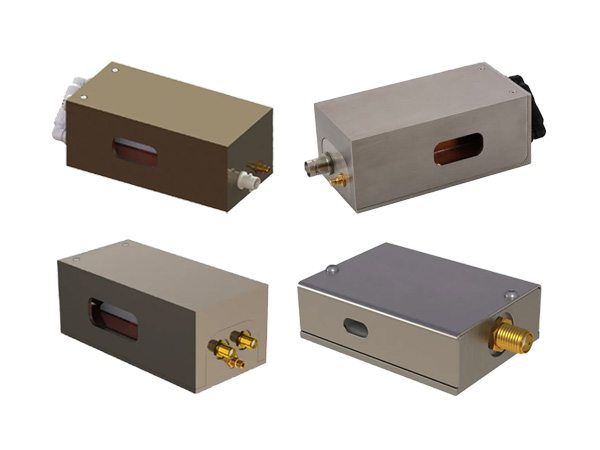
Our SAG series is a core product line tailored for free-space laser modulation, high-frequency phase control, and supporting driver needs. Focusing on scientific research and mid-to-high-end testing scenarios, it boasts excellent performance stability and operational flexibility. Leveraging high-quality materials like lithium niobate and advanced processes, the series has formed unique technological advantages across multiple fields. Below is a detailed overview of each sub-series, including core advantages, typical application cases, and development prospects aligned with industry trends.
Detailed Summary of Core Sub-Series
1. SAG-FEOM Series (Free-Space Non-Resonant Electro-Optic Modulators)
Core Positioning: A general-purpose free-space laser modulation device, suitable for basic and advanced modulation needs in multi-wavelength and multi-power scenarios.
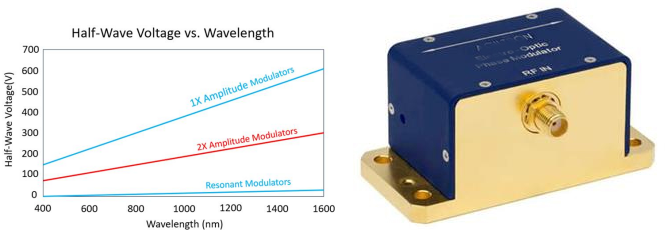
Key Parameters: Wavelength coverage of 400nm-2000nm, supporting amplitude/phase modulation; aperture ≥ 3mm, non-resonant half-wave voltage of 80-600V, maximum optical power density of 20W/cm² at 1064nm wavelength; bandwidth from DC to 1MHz, input capacitance of only 14pF (typical value).
Core Advantages:
Superior Crystal Performance: Adopts compensated electro-optic crystal pairs. Compared with traditional lithium niobate crystals, it has smaller piezoelectric effect and lower charge migration, resulting in clean modulation response without ringing, stronger short-wavelength stability and higher power bearing capacity;
Flexible Adaptability: Supports fiber coupling options, and can be matched with polarizing cubes, optical isolators, output detectors and other accessories to meet diverse needs such as high extinction ratio modulation and feedback control;
Strong Environmental Adaptability: Operating temperature range of -20~50℃, resistant to wide-temperature environments, with high compatibility in experimental scenarios.
Suitable Scenarios: Basic optical testing in laboratories, laser modulation experiments, holographic imaging, micro-nano processing and other low-to-medium power laser control scenarios.
Typical Application Cases: A precision optical laboratory used this series with a 1064nm pulsed laser for micro-nano structure etching. The low piezoelectric effect effectively avoided signal interference, improving the etching edge precision by 30%; in the prototype testing of vehicle-mounted lidar, its wide wavelength adaptability met the amplitude modulation needs of both 850nm and 1550nm bands, successfully completing the calibration of ranging accuracy.
Development Prospects: Combining the development trend of thin-film lithium niobate technology, it will be upgraded towards miniaturization and low power consumption in the future. The device size is expected to be reduced to one-tenth of that of traditional bulk materials, suitable for portable precision instruments and micro-optical systems; at the same time, it will optimize the half-wave voltage and insertion loss indicators, expand to industrial large-scale application scenarios such as photovoltaic cell etching and lithium battery pole piece cutting, and further improve the high-power bearing capacity to match the needs of industrial-grade laser equipment.
2. SAG-REOM Series (Free-Space Resonant Electro-Optic Modulators)
Core Positioning: A low-voltage, fixed-frequency free-space modulator, focusing on convenient operation and cost-effectiveness.
Key Parameters: Wavelength of 400nm-2000nm, resonant half-wave voltage as low as 15V (633nm), supporting fixed frequency options such as 1/5/10/15/30/50MHz (customizable up to 100MHz); input impedance of 50Ω, maximum aperture of 3mm, high-power version with optical power density of 500MW/mm² (1060nm).
Core Advantages:
Low Driving Threshold: The resonant design significantly reduces the driving voltage (only about 12V), eliminating the need for high-voltage driving equipment. It can be directly driven by a laboratory function generator, saving supporting costs;
High Modulation Efficiency: Stable sinusoidal response characteristics, minimal piezoelectric effect and charge accumulation, sufficient modulation depth. For wavelengths above 1000nm, full modulation depth can be achieved through double crystal pairs;
Outstanding Cost-Effectiveness: Integrates multi-frequency switching function, allowing one device to meet the testing needs of multiple fixed frequencies without replacing components, improving scientific research efficiency.
Suitable Scenarios: Specialized experiments with high frequency stability requirements, laser pulse modulation, and construction of low-cost optical testing platforms.
Typical Application Cases: Many universities have selected this series to build optical teaching experimental platforms. Its convenient operation helps students quickly grasp the core principles of resonant modulation; a research team used the 15MHz model for laser pulse coding experiments. The low-voltage driving design reduced the system construction cost by 40% while meeting the experimental precision requirements.
Development Prospects: It will keep up with the trend of frequency customization, support higher fixed frequency (such as above 200MHz) customization to adapt to high-frequency laser pulse modulation needs; at the same time, it will optimize the resonant structure design, improve compatibility with function generators, expand to scenarios such as autonomous driving lidar prototype testing and low-cost quantum communication experimental platforms, and further strengthen the cost-effectiveness advantage.
SAG-HVED Series (High-Voltage Driver Modules)
Core Positioning: A supporting driving device specially designed for non-resonant electro-optic modulators, focusing on high-voltage and fast-response driving needs.
Key Parameters: Output voltage of 0~400V (typical ±220V), bandwidth of 0.5~1MHz (0.5MHz at 400V output); rise/fall time of 7~10ns, maximum delay time of 200ns, pulse jitter of 1~20ps; supporting 0~50V adjustable bias voltage.
Core Advantages:
Fast Response Speed: ns-level switching speed can accurately match the high-speed signal processing needs of non-resonant modulators, ensuring modulation timing precision;
Strong Performance Adjustability: The bias voltage can be flexibly adjusted. By adjusting the DC bias voltage, the working point of the electro-optic device can be optimized to adapt to different modulation intensity needs;
Excellent Stability: Equipped with polarity modulation function, which can reduce the charge accumulation of photorefractive effect in short-wavelength and high-power scenarios, extending the service life of the device;
Wide Versatility:Supports the driving of third-party non-resonant modulators, not only compatible with the SAG series but also with similar products of other brands.
Suitable Scenarios: Supporting driving of non-resonant electro-optic modulators, laser modulation systems with high-voltage requirements, and precision optical experimental platforms.
Typical Application Cases: A military research institute used it with the SAG-FEOM to build a high-power laser modulation system. The 400V high-voltage output and ns-level response speed ensured stable laser modulation, and the polarity modulation function doubled the service life of the core device; an optoelectronic enterprise used it to replace the old driving equipment, directly improving the system response speed by 50% without modifying the original modulator.
Development Prospects: It will be upgraded towards higher bandwidth and lower pulse jitter, with the response speed expected to break through 5ns to adapt to the driving needs of high-frequency modulators above 10GHz; at the same time, it will strengthen intelligent control capabilities, add remote bias voltage adjustment and status monitoring functions, be compatible with new modulators such as thin-film lithium niobate, and expand to supporting applications in high-end scenarios such as 6G fronthaul networks and quantum key distribution systems.
4. SAG-GHZM Series (GHz-Level Resonant Optical Phase Modulators)
Core Positioning: A dedicated high-frequency phase modulation device, focusing on high speed and high reliability, suitable for cutting-edge scientific research scenarios.
Key Parameters: Resonant frequency of 0.7~3.05GHz, bandwidth of 3.8~10MHz, Q factor of 325; maximum modulation depth of 2.5rad, sensitivity of 0.38~0.47rad/V; wavelength adaptability of 350~780nm, optical aperture of 1~2mm², supporting TEC temperature control.
Core Advantages:
Excellent High-Frequency Performance: GHz-level operating frequency, as a core device for cutting-edge scientific research such as atomic clocks and optical confinement, meeting high-speed phase control needs;
Integrated Design: Built-in resonant circuit, supporting free-space or fiber-coupled packaging, optional amplifier driver and temperature stabilization module, with high integration and easy system construction;
High Reliability: Low insertion loss, maximum wavefront distortion of only 1/6λ (633nm), excellent long-term operating stability, suitable for the rigorous requirements of scientific research experiments;
Flexible Customization: Resonant frequency (1.12GHz/1.75GHz/3.05GHz, etc.) can be selected according to needs to adapt to the frequency requirements of different scientific research scenarios.
Suitable Scenarios: Atomic clock research and development, optical confinement experiments, high-frequency laser phase control, precision instruments and meters, aerospace-grade optical testing.
Typical Application Cases: A national-level scientific research institute used the 3.05GHz model to develop a high-precision atomic clock. The low wavefront distortion characteristic enabled the atomic clock to achieve a clock error precision of 10⁻¹⁶ order of magnitude, reaching the international advanced level; in ultra-cold atomic physics experiments, its GHz-level phase modulation generated a stable optical lattice, helping the research team break through the key technical bottleneck in the study of interatomic interactions.
Development Prospects: It will comply with the high-frequency trend, with the resonant frequency breaking through 10GHz to match cutting-edge needs such as terahertz communication and 6G radio frequency synthesis; combined with the advantages of thin-film lithium niobate materials, it will realize the integrated upgrade of devices, promote monolithic integration with amplifiers and temperature control modules, expand to high-end applications such as microwave photonic links and high-frequency lidar, and at the same time strengthen customization capabilities to support precise adaptation of full-band wavelengths and multi-band frequencies.
II. Overall Development Prospects and Industry Trends of the SAG Series
According to industry research data, the global electro-optic modulator market revenue was approximately 250 million US dollars in 2025, and is expected to reach 422 million US dollars by 2032, with a compound annual growth rate of 7.8% from 2026 to 2032. The rapid development of high-speed optical communication, quantum technology, lidar, high-end manufacturing and other fields will bring broad development space for the SAG series, showing four core trends overall:
(I) Technological Iteration: In-depth Integration of High-Frequency, Miniaturization and Integration
High-frequency is the core development direction. With the advancement of 6G and terahertz communication technologies, the demand for modulator bandwidth continues to rise. The SAG-GHZM series will break through to frequencies above 10GHz. At the same time, drawing on GeSi integration technology and thin-film lithium niobate processes, it will achieve dual improvements in bandwidth and integration. In terms of miniaturization, through chip-level packaging technology, the device size will be reduced to one-tenth of that of traditional products, suitable for scenarios such as portable precision instruments and UAV-mounted laser equipment. Integration will realize the integrated design of "modulator + driver + temperature control + optical isolator", reducing the difficulty of system construction, especially suitable for highly integrated needs such as quantum communication and micro-lidar. In addition, at the material level, it will optimize the performance of lithium niobate crystals, combined with processes such as δ-layer doping, to improve modulation efficiency and stability, breaking through the performance bottlenecks of traditional materials.
(II) Application Expansion: Penetration from Scientific Research to Industrial Scale and High-End Customization
Currently, the SAG series has formed stable advantages in the field of scientific research, and will accelerate its extension to industrial large-scale applications in the future. In the field of high-end manufacturing, the SAG-FEOM series will be suitable for scenarios such as high-precision etching of photovoltaic cells and micro-nano processing of semiconductor chips, helping to improve manufacturing efficiency and product quality with its high-power bearing capacity and precise modulation performance; in the communication field, it will support the upgrade of 5G/6G fronthaul networks and data center optical interconnection, adapting to the needs of 1.6T and 3.2T high-speed optical transmission systems; in the aerospace and military fields, the SAG-GHZM and SAG-HVED series will expand to high-end scenarios such as satellite communication, spacecraft laser ranging, and high-power laser weapon testing with their high stability and resistance to harsh environments. At the same time, aiming at the special needs of subdivided fields such as quantum computing and precision spectral analysis, it will provide full-band wavelength (320nm-2400nm) and multi-band frequency customization services to accurately match differentiated application scenarios.
(III) Market Competition: Strengthening Differentiated Advantages and Ecological Layout
The global electro-optic modulator market is highly concentrated, with the top five manufacturers accounting for about 72% of the market share. The SAG series will consolidate its market position relying on three differentiated advantages: first, technological advantage, focusing on the segmented fields of free-space modulation and GHz-level phase modulation, strengthening the performance stability and reliability of lithium niobate-based devices; second, cost advantage, the SAG-REOM series creates cost-effective products with low-voltage driving design and multi-frequency integration function, suitable for the teaching needs of universities and the testing needs of small and medium-sized enterprises; third, ecological advantage, building an integrated solution of "core devices + supporting equipment + commissioning services + control software" to improve customer stickiness. At the same time, relying on our global channel advantages, it will expand its share in European, American, Asia-Pacific and other markets, especially seizing the opportunities of 5G/6G construction and high-end manufacturing upgrading in emerging markets such as China and India to achieve market share growth.
(IV) Cross-Border Integration: Empowering Technological Innovation Breakthroughs in Multiple Fields
With the intensification of the optoelectronic integration trend, the SAG series will deeply empower technological innovation in multiple fields. In the field of quantum technology, it will provide high extinction ratio and high stability modulation devices for quantum key distribution and quantum computing, helping to reduce the bit error rate of key distribution and improve the precision of quantum bit manipulation; in the field of microwave photonics, it will support the optical domain transmission and processing of microwave signals, adapting to the low-loss and long-distance transmission needs of radar, satellite communication and other scenarios; in the field of intelligent sensing, it will integrate with lidar and optical fiber sensing equipment to improve sensing precision and response speed, suitable for scenarios such as autonomous driving and deep-sea exploration. In addition, it will actively explore the combination with artificial intelligence and big data technologies to realize intelligent monitoring and adaptive adjustment of the modulator's working status, further improving the stability and intelligence level of the device's operation.
In summary, relying on superior technical performance, rich application scenario adaptability and a clear technological iteration route, the SAG series will continue to comply with industry development trends and play a core supporting role in scientific research innovation and industrial upgrading. At the same time, relying on market expansion and ecological layout, it will achieve dual improvements in product value and market share, becoming a core competitive product in the global electro-optic modulator field.
For more information on our EOM, please click here.